Pool Leak Investigation
Pool Leak Detection & Repairs Gold Coast
Find out where your pool water may be going. Get a Free Estimate
Pool Leak Investigation
Find out where your pool water may be going. Get a Free Estimate
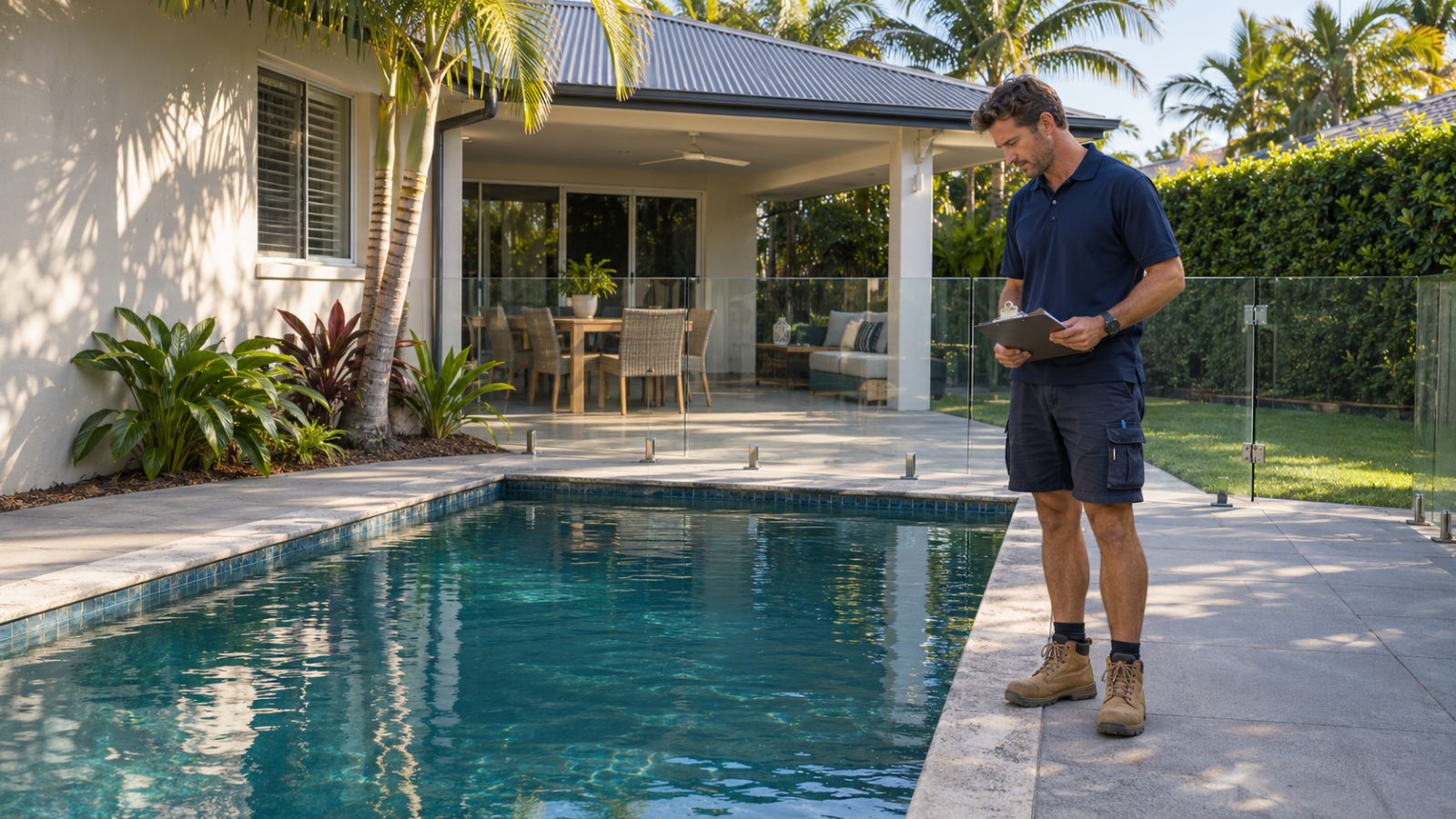
A swimming pool that keeps losing water can become expensive and frustrating. You may find yourself topping it up more often, adjusting chemicals repeatedly or noticing damp ground around the equipment. Some leaks are visible, but others develop in places that are difficult to inspect, including plumbing lines, fittings, skimmer connections and concealed sections of the pool structure. The first step is to distinguish genuine leakage from normal water loss caused by evaporation, splashing, cleaning and maintenance. We help Gold Coast pool owners understand the symptoms and arrange an appropriate investigation rather than assuming that the first visible defect is responsible.
Leak-related problems should be assessed promptly because persistent water loss may contribute to wasted water, unstable chemical balance and moisture around nearby structures. In some circumstances, escaping water can also affect surrounding ground conditions. The appropriate testing method depends on the pool and its equipment. We begin with the information you provide, review the accessible components and determine what further testing may be necessary. Once the likely source has been identified, we explain whether a targeted repair is appropriate, what access may be required and whether specialist investigation is recommended.
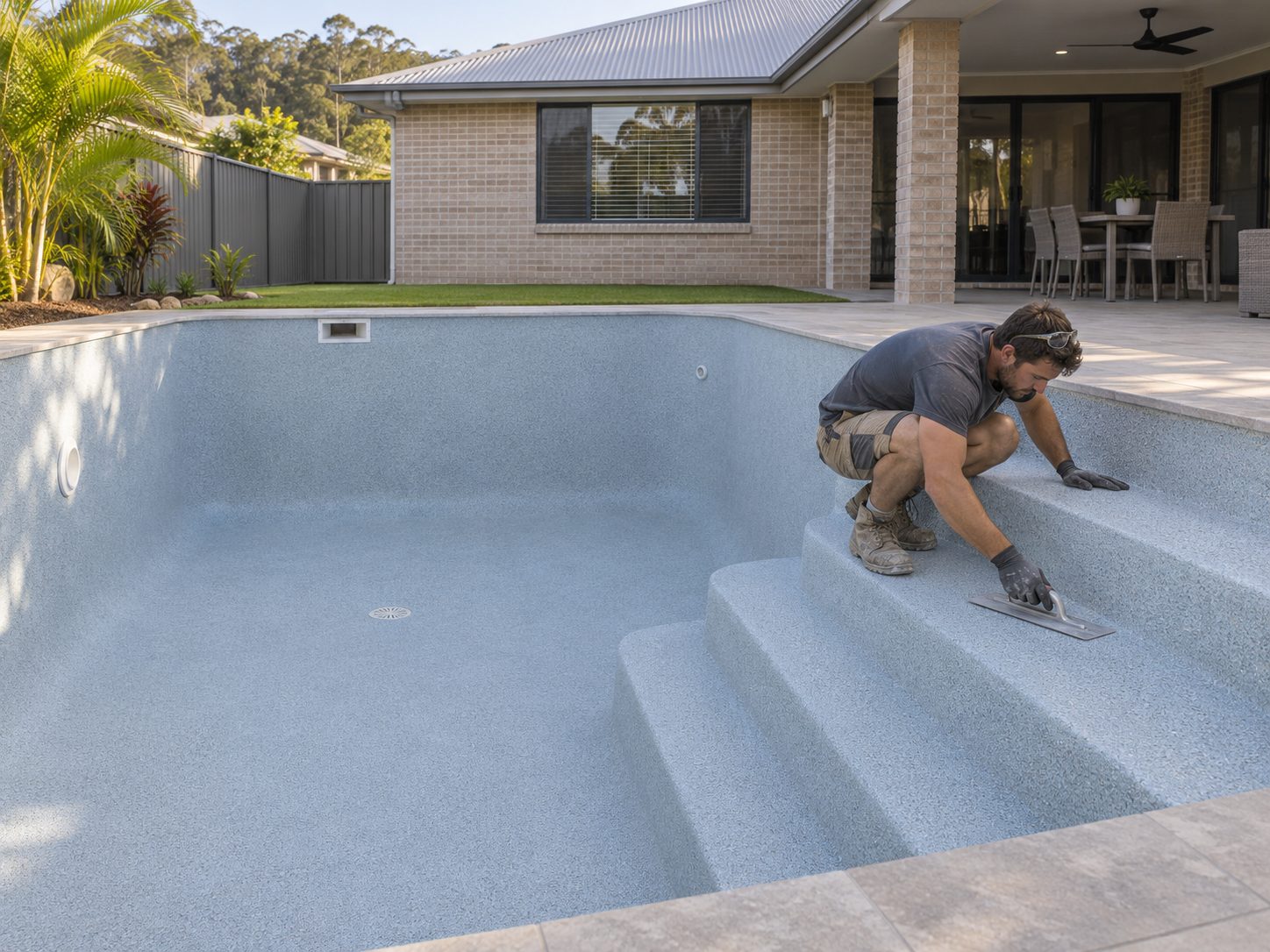
A falling water level does not automatically prove that a pool shell is leaking. Water can leave a pool through several different pathways, and the symptoms may change depending on weather, pump operation and water level. Understanding those patterns helps guide the investigation. Our approach starts with observations and accessible checks, followed by appropriate testing where needed. Depending on the suspected issue, investigation may involve controlled water-level monitoring, inspection of fittings and seals, pressure testing by a suitably equipped specialist or other recognised leak-location methods. We explain which checks are relevant before recommending repairs. The aim is to avoid unnecessary excavation, surface damage or repeated temporary patching.
If you refill your pool more frequently than expected, record the approximate water loss over a consistent period. Compare conditions when possible and note recent weather, backwashing or heavy swimming activity. These details help distinguish probable leakage from ordinary water use. A bucket comparison can provide an initial indication, although it cannot locate the source or replace proper investigation.
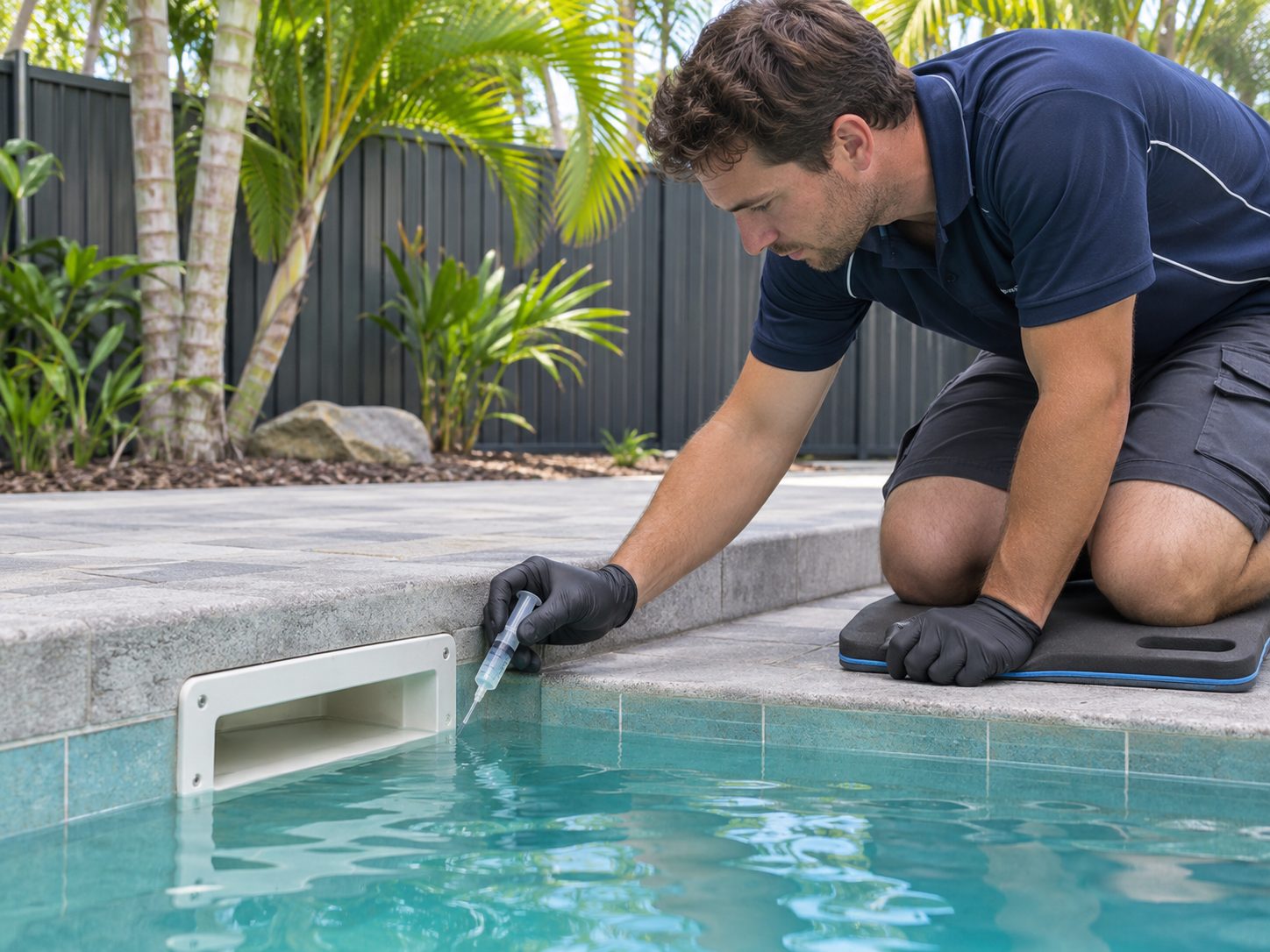
Pool fittings create junctions between different materials. Over time, seals can deteriorate and surrounding surfaces may develop movement-related gaps. We inspect accessible skimmer mouths, return fittings, light surrounds and other likely junctions. Repairs may involve suitable sealants, replacement components or more extensive work where the surrounding material has deteriorated.
Concealed plumbing can be difficult to assess without the right equipment. Signs may include unusual pump behaviour, air entering the system or water loss that changes during filtration, although none of these signs confirms a specific leak. Where plumbing is suspected, pressure testing or specialist location work may be appropriate before any pipe repair or excavation.
A crack can allow water through the pool shell, but not every visible crack is leaking. The position, width, movement and surrounding finish all matter. Repairs may involve preparation and sealing, suitable injection systems or structural remediation, depending on the diagnosis. Significant or actively moving cracks may need engineering advice before work proceeds.
After an identified defect has been repaired, the pool should be monitored to confirm that water loss has reduced to an expected level. Some pools have more than one leak, so an initial repair may not resolve every source. We explain the recommended monitoring approach and any remaining uncertainty rather than treating one repaired defect as proof that all leakage is resolved.
| Service | Estimated Cost | Average |
|---|---|---|
| Initial leak assessment | Quoted based on access and scope | Site dependent |
| Specialist leak-location testing | Quoted according to testing required | Varies |
| Fitting or seal repair | Quoted after identifying defect | Varies |
| Plumbing or structural leak repair | Quoted following investigation | Project dependent |
These are quotation categories, not fixed prices or market averages. Actual costs depend on testing, access, materials, excavation and the confirmed cause of leakage. A written estimate should identify the proposed scope and any exclusions.
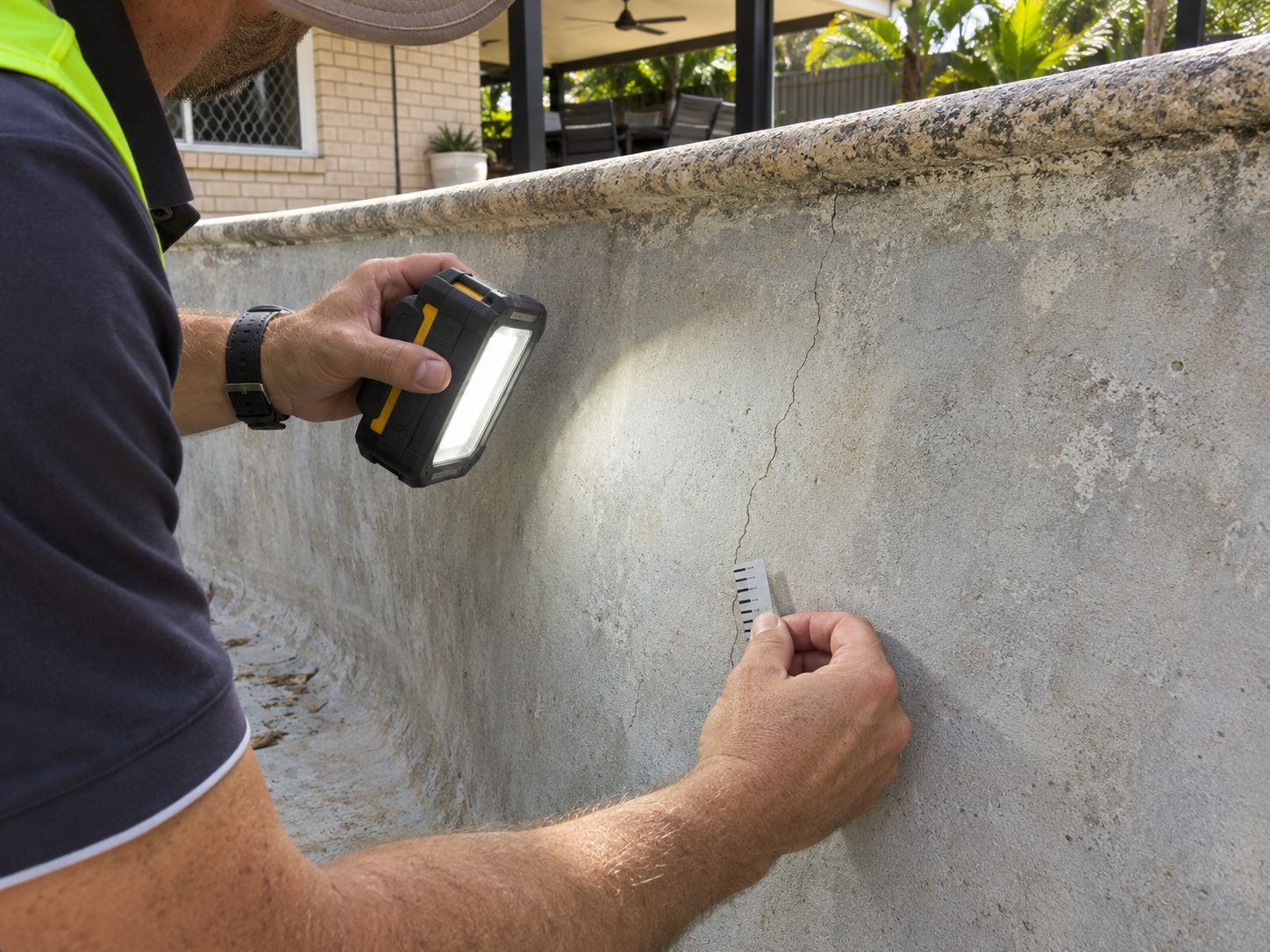
We avoid treating every damp patch or crack as proof of a leak. Understanding the symptoms helps guide the right next step.
We consider targeted repairs where suitable and explain when broader investigation or replacement is justified.
We discuss testing requirements, access limitations and follow-up monitoring so you understand what can reasonably be confirmed.
If your pool keeps losing water, contact us on (07) 5610 2737 to discuss the symptoms and arrange a leak assessment.
Free — no obligations
Tell us about the water loss, how long it has been happening and whether pump operation or recent maintenance affects it. Photographs and simple water-level records may help.
We inspect accessible areas and determine whether targeted testing or specialist equipment is needed to narrow down the suspected leak location.
Once the likely fault is understood, we discuss materials, access, preparation, expected downtime and the proposed repair scope before work begins.
Suitable defects are repaired using methods appropriate to the material and location. Follow-up water-level monitoring helps check the result and identify any remaining concerns.